More creation.
More access.
More leadership.

May-Fall_Aristide Rontini_ph.Johan-Sundell
previous arrow
next arrow

Europe Beyond Access

Europe Beyond Access works with Deaf and disabled artists across Europe through commissions, co-productions, touring, artistic exchange, research, and advocacy. 

Together, we are building a more accessible, equitable, and innovative performing arts sector. 

EBA Learning Journeys

For disabled artists, producers and promoters, funders and policymakers.

A series of digital toolkits and educational resources: films, discussions, podcasts, creative tasks, reports and more to support professional development!

Latest news

See more news

Europe Beyond Access launches its Deaf Strategy on the International Day of Sign Languages
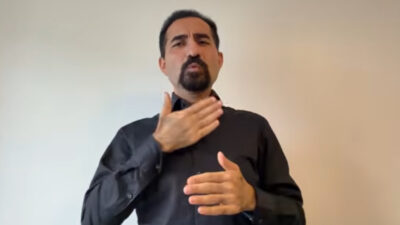
Developed with Deaf artists and interpreters, the strategy reinforces our commitment to greater participation and representation for Deaf artists across our programme

Perform Europe Launches Third Open Call to Support Cross-Border Touring in the Performing Arts
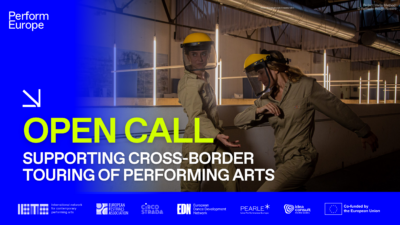
1.4 million to support touring proposals across 41 Creative Europe countries. Among the priorities: diversity and inclusion. Deadline: 22 October 2026

Europe Beyond Access on the Road: Connecting with International Cultural Networks

Strengthening international connections and sharing knowledge: a vital part of EBA
Disabled Artists Scratch Night

Date: June 25, 2026

Thursday 25 February 2026, Cube – Project Art Center, Dublin, Ireland

Teatr Klucz: INTRO

Date: May 28, 2026

Thursday 28 May 2026, The Grand Hall – ZAMEK Culture Centre, Poznan (Poland)

Skånes Danseteater: MAY FALL

Date: January 30, 2026

30 January – Thursday 16 April 2026, Skånes Danteater, Östra Varvscenen 13a, Mälmo (Sweden)

Would you like to stay informed?

We use both the term “artist with disability” and “disabled artist”. We are aware that different countries and languages use different terminology. Even in English-speaking countries, terminology favoured by activists differs. We are also aware that different people define themselves in different ways, and that people self-define as they prefer. When we use the term “disabled” or “with disability” we include those who are Deaf, Neurodivergent and chronically ill. We know that some Deaf people prefer to define themselves as part of a marginalised language group, and not as disabled. Yet we also know that for other Deaf people allyship with others experiencing barriers within society (including in the cultural sector) is an important part of their identity. At its heart, Europe Beyond Access focuses attention on the artistic innovation that so often accompanies artists who have not been part of the mainstream cultural sector.